Creating a digital estate plan is an important step toward protecting the people you care about.


Protecting yourself against identity theft and fraud is an important step toward protecting the people and things you care about.
As The Hartford explains in its guide, 4 Steps to Create Your Digital Estate Plan, our lives have become increasingly digital. Bank accounts, insurance information, photographs, subscriptions, investments, social media accounts and other important records may exist primarily — or entirely — online.
Knowing what you have, where it is and who should have access to it is an essential part of modern estate planning.
But it also raises a bigger question:
If something happened tomorrow, would the people you trust actually know what they need to know — and be able to find it?
That is where digital estate planning can become something larger: digital preparedness.
Secure storage is important. But it is only the beginning.
Password managers, encrypted cloud storage and other secure technologies can play valuable roles in protecting information.
But most families don’t have just a password problem or a document-storage problem. They have an organization, access and communication problem.
Important information is scattered across filing cabinets, email accounts, computers, phones, cloud drives, financial institutions and different applications.
One spouse may handle the finances while another manages healthcare information. Insurance policies may be stored somewhere entirely different from wills, property records or emergency contacts. Adult children may know that important documents exist without knowing where to find them.
Each individual piece may be secure.
The family can still be unprepared.
From a Collection of Information to a Preparedness System
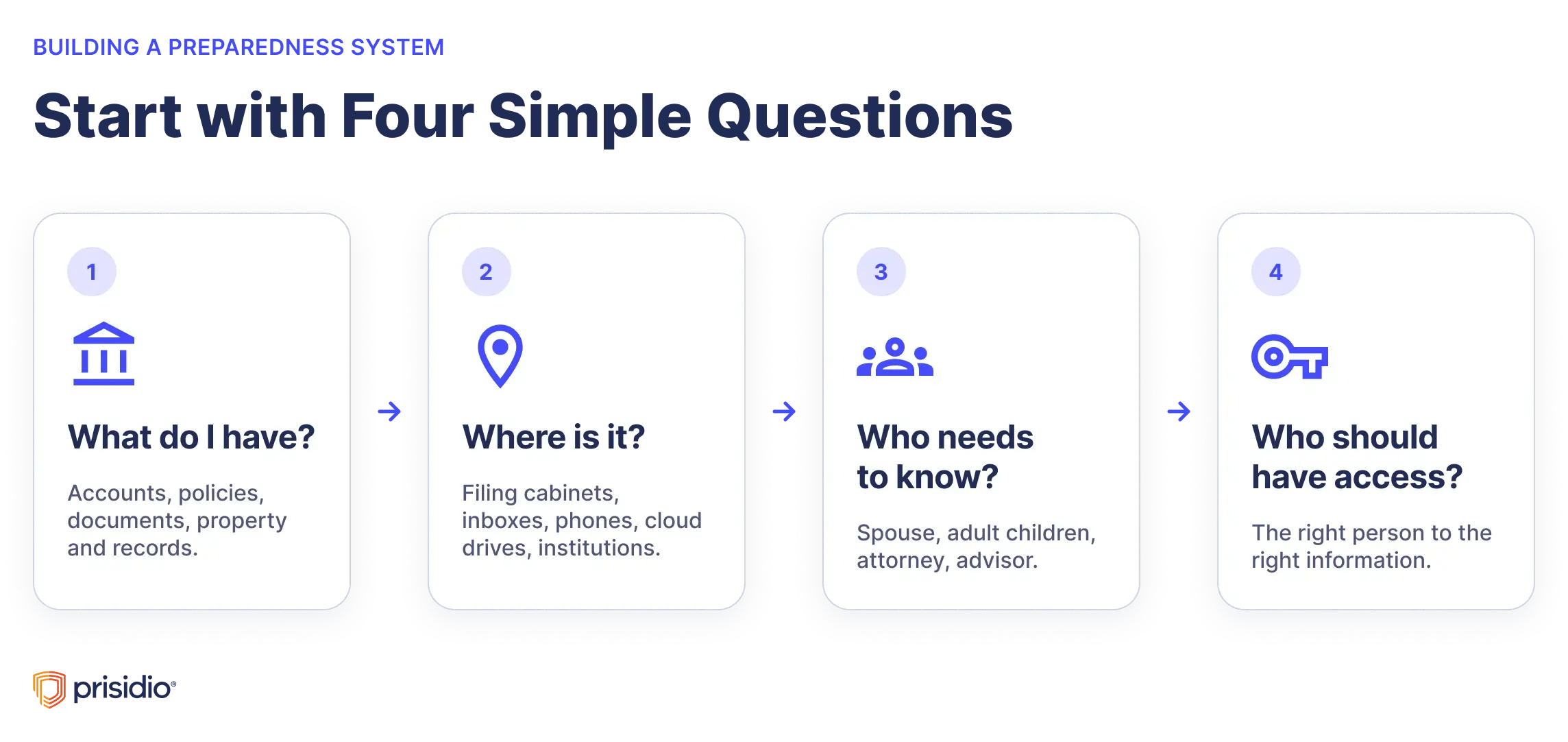
A more comprehensive approach starts with the same fundamental questions involved in creating a digital estate plan:
What do I have? Where is it? Who needs to know about it? Who should have access to it?
Then it goes further.
Instead of simply accumulating documents and passwords, think about organizing the important information in your life around the people who may eventually need it and the situations in which they may need it.
That might include financial and insurance records, estate documents, property information, healthcare directives, household information, important contacts, family records and instructions — alongside the digital accounts that increasingly connect all of them.
And preparedness isn’t only about what happens after someone dies.
A hospitalization, natural disaster, extended trip, accident or other unexpected event can suddenly require someone else to step in.
The goal is simple:
The right information. In the right place. Available to the right people. At the right time.
Access Should Also Be Intentional
There is another important difference between storing information and managing preparedness.
Not everyone needs access to everything.
Your spouse may need one set of information. An adult child may need another. An attorney, financial advisor or other trusted person may need something different.
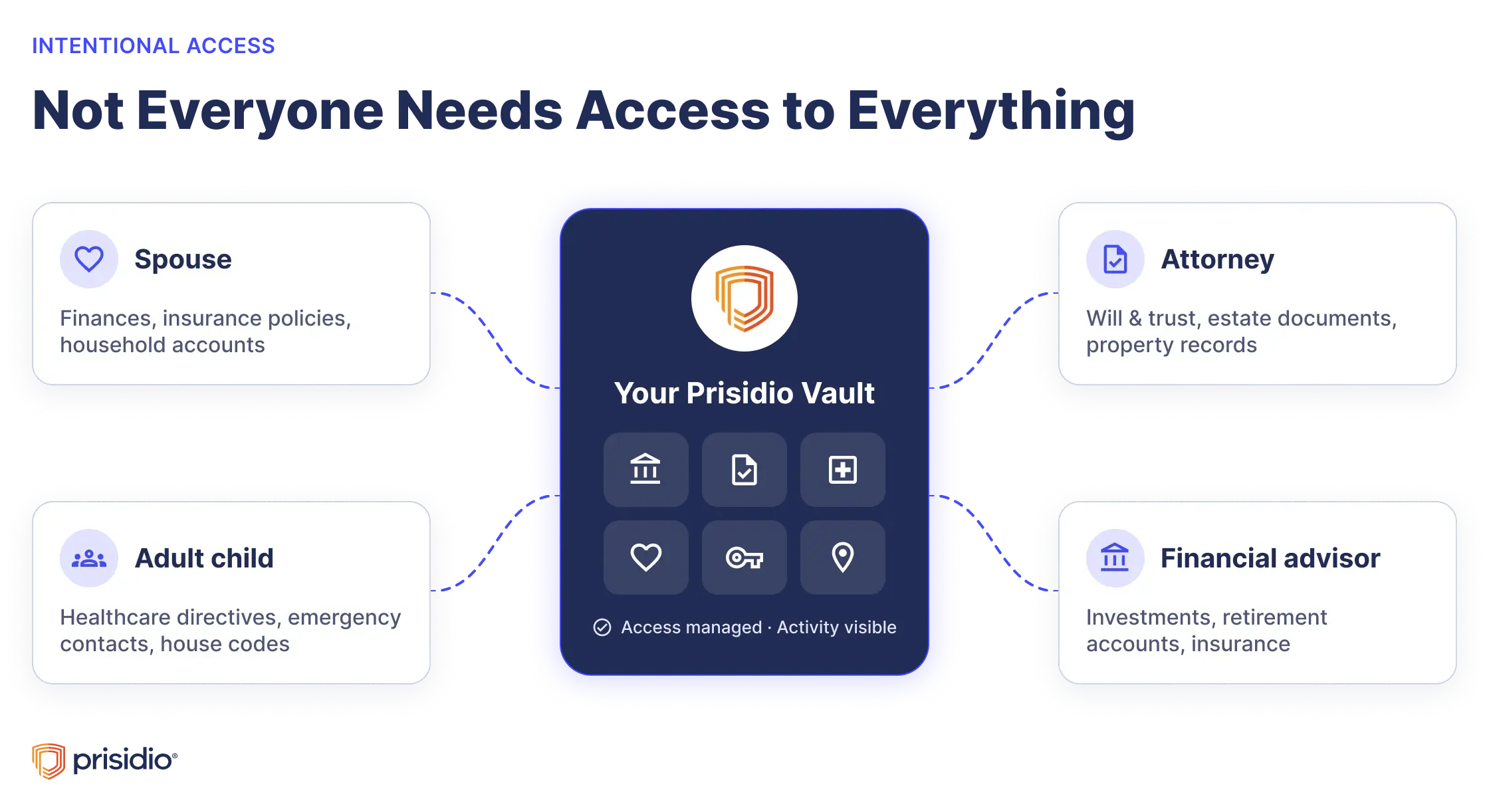
A comprehensive digital vault such as Prisidio allows people to securely organize important information and intentionally share it with trusted individuals rather than simply telling someone where a folder, spreadsheet or password list is located.
It also creates greater visibility into that sharing — including the ability to manage access and understand engagement with information that has been shared.
That turns digital organization from a static exercise into an ongoing process.
Your Plan Should Change as Your Life Changes
Estate planning can sometimes feel like something you complete and put on a shelf.
Life doesn’t work that way.
You buy or sell a home. Insurance policies change. Accounts open and close. Children grow up. Parents age. Relationships and responsibilities evolve.
Your preparedness plan should evolve with them.
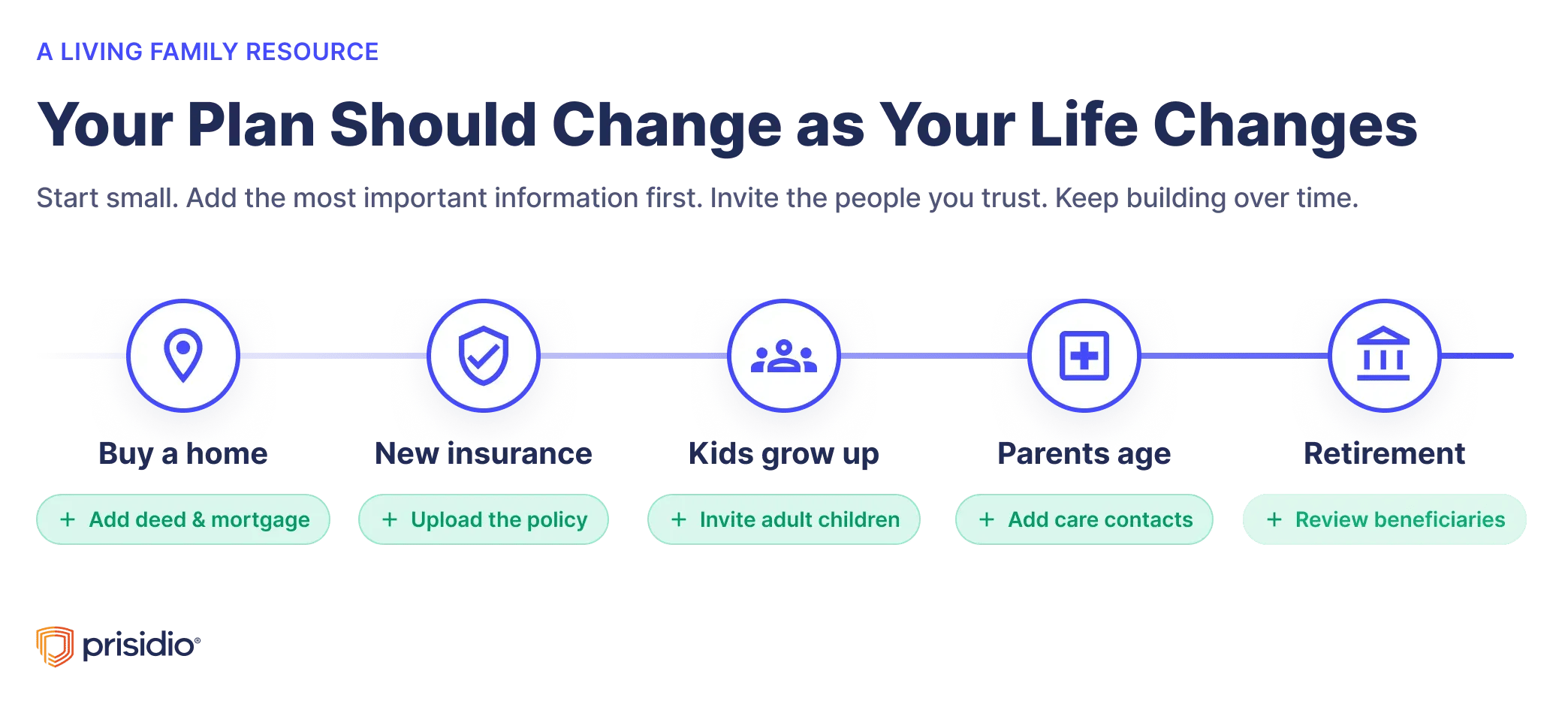
That is why the most useful digital estate plan isn’t simply something created for the end of life. It becomes a living family resource that can be maintained throughout life.
Start small. Add the most important information first. Invite the people you trust. Continue building over time.
The objective isn’t perfection.
It’s making sure the people you care about aren’t left searching for answers when they need them most.
Take the Next Step
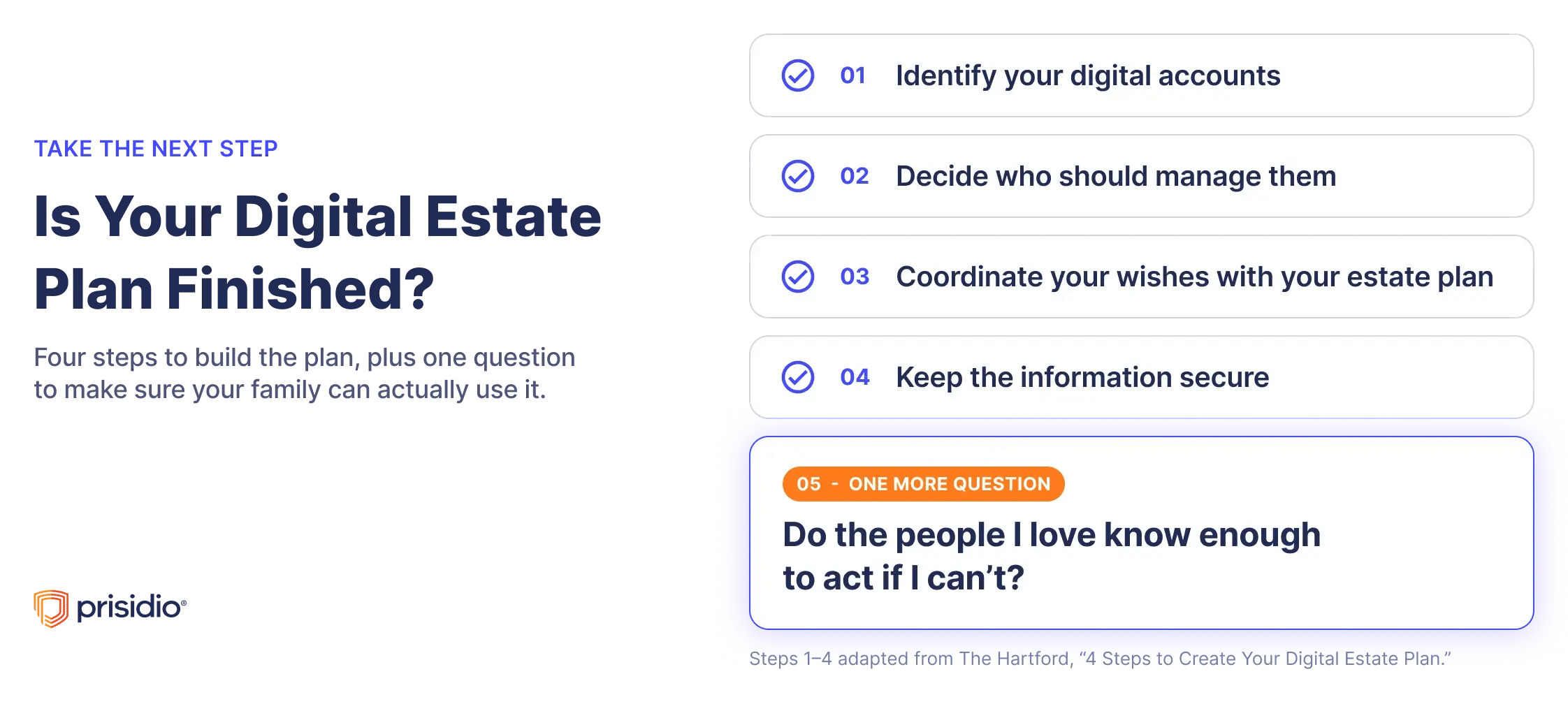
The Hartford’s four-step approach provides an excellent starting point: identify your digital accounts, determine who should manage them, coordinate your wishes with your estate planning and keep the information secure.
Then ask one more question:
Do the people I love know enough to act if I can’t?
If the answer is “I’m not sure,” your digital estate plan isn’t finished.
It’s time to take the next step — from simply storing information to organizing your life, connecting the people you trust and creating a preparedness system your family can actually use.
That’s the role Prisidio was designed to fill.