If your personal information were compromised tomorrow, would you know what to do and would the people you trust know how to help?


Protecting your identity is more than recognizing a suspicious email or keeping your credit card information safe. It's also about knowing where your personal information lives, keeping it secure and being prepared to act if something goes wrong.
As The Hartford explains in its guide, What You Need to Know About Identity Theft and Fraud, identity thieves use a variety of methods to obtain personal information, including phishing, skimming, hacking and stealing physical documents. Once criminals have access to that information, the consequences can extend well beyond a single compromised account.
While there are important steps everyone can take to reduce their risk, protecting your identity also means having a plan for the information that makes up your digital life.
And that's where being organized can make a meaningful difference.
Your Personal Information Is More Connected Than Ever
Think about how much information is connected to your identity.
Your bank accounts, credit cards, insurance policies, Social Security information, passwords, driver's license, passport, tax documents and other personal records all contain details that could potentially be used to impersonate you.
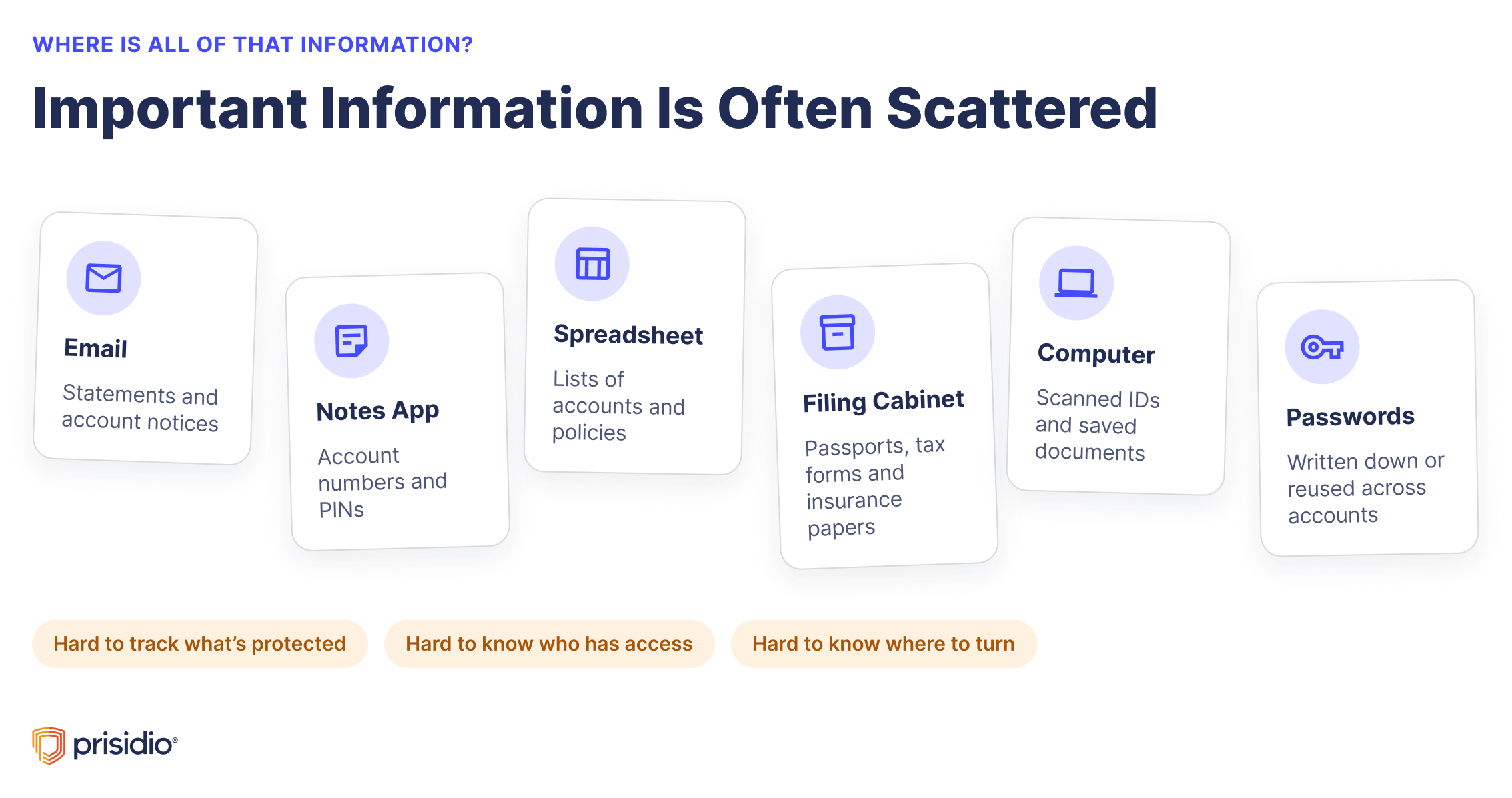
But where is all of that information?
Some might be saved in an email account. Other details may be stored in a notes app, a spreadsheet, a filing cabinet or a collection of documents on your computer. Passwords might be written down or reused across multiple accounts.
The problem isn't necessarily that people don't care about protecting their information.
It's that important information is often scattered across too many places, making it difficult to keep track of what's protected, who has access and where to turn when something goes wrong.
The more difficult it is to manage your personal information, the harder it can be to recognize potential exposure and respond quickly.
Prevention Starts with Better Information Management
As The Hartford recommends, protecting yourself against identity theft starts with everyday precautions: being careful about sharing personal information, protecting your PINs, monitoring financial accounts, securing important documents and recognizing suspicious communications.
But there's another important part of prevention: organizing the information you already have.
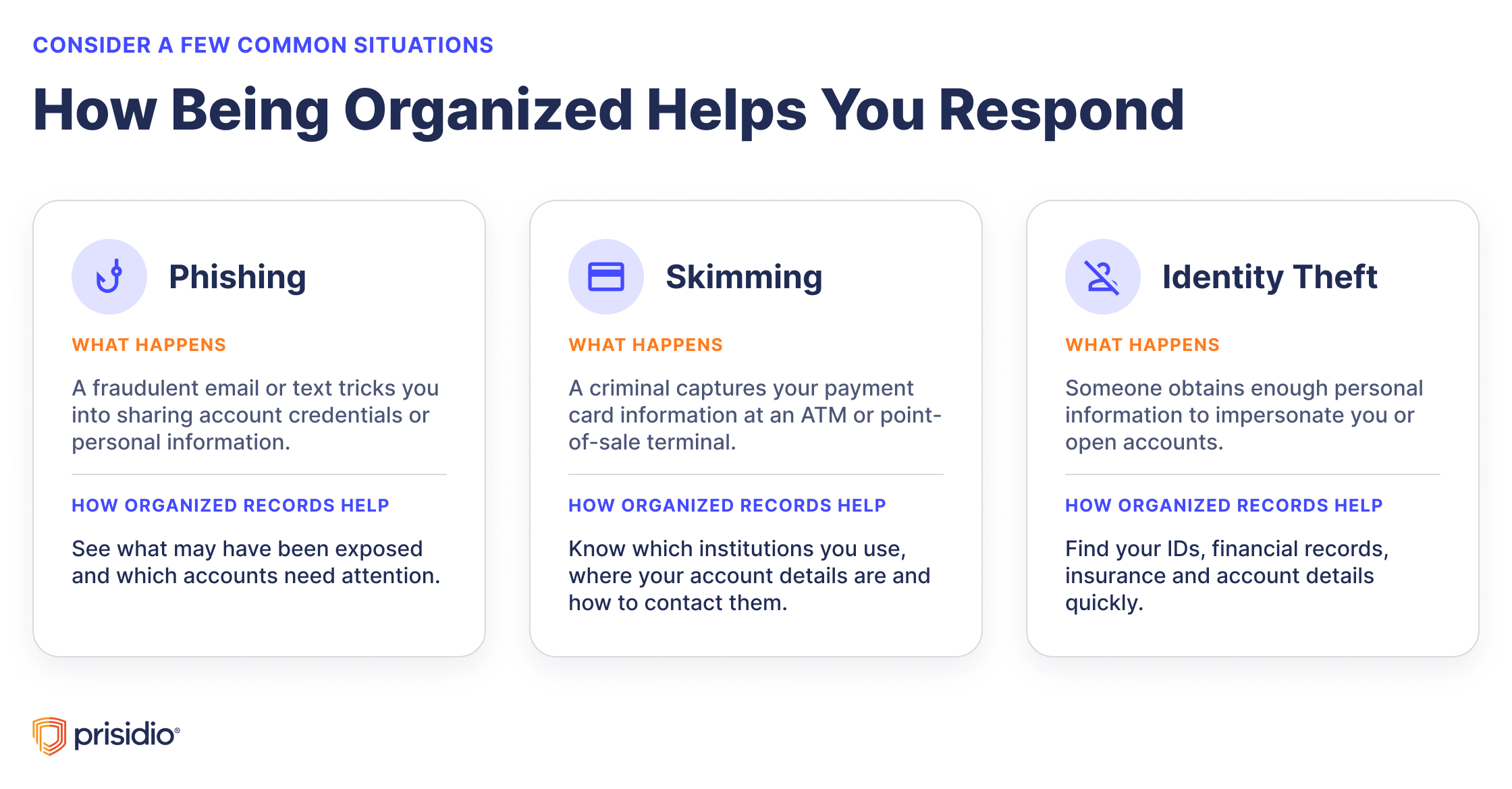
Consider a few common situations:
Phishing: A fraudulent email or text message tricks you into sharing account credentials or personal information. If your important account details and records are scattered across different locations, it can be difficult to determine what information may have been exposed and which accounts need attention.
Skimming: A criminal captures your payment card information at an ATM or point-of-sale terminal. Knowing which financial institutions you use, where your account information is located and how to contact them can help you respond more efficiently.
Identity Theft: Someone obtains enough personal information to impersonate you, open accounts or access existing financial resources. Having your important identification documents, financial records, insurance information and account details organized can make it easier to identify what needs attention.
None of these situations can be eliminated simply by organizing information. But having a secure, centralized place for your important records can help reduce unnecessary exposure and make it easier to take action.
One Secure Place for Everything That Matters
This is where a comprehensive digital vault like Prisidio can make a difference.
Instead of keeping important information across emails, spreadsheets, paper files and disconnected applications, Prisidio provides one secure place to organize the information that matters most.
That includes:
- Personal identification: Social Security information, driver's licenses, passports and other important identification documents.
- Financial information: Bank accounts, credit cards, investment information and other financial records.
- Accounts and passwords: Keep important account details and credentials organized in your digital vault.
- Insurance information: Store policy details and contact information so you know where to turn when you need assistance.
- Important documents: Keep tax records, legal documents, statements and other sensitive information accessible.
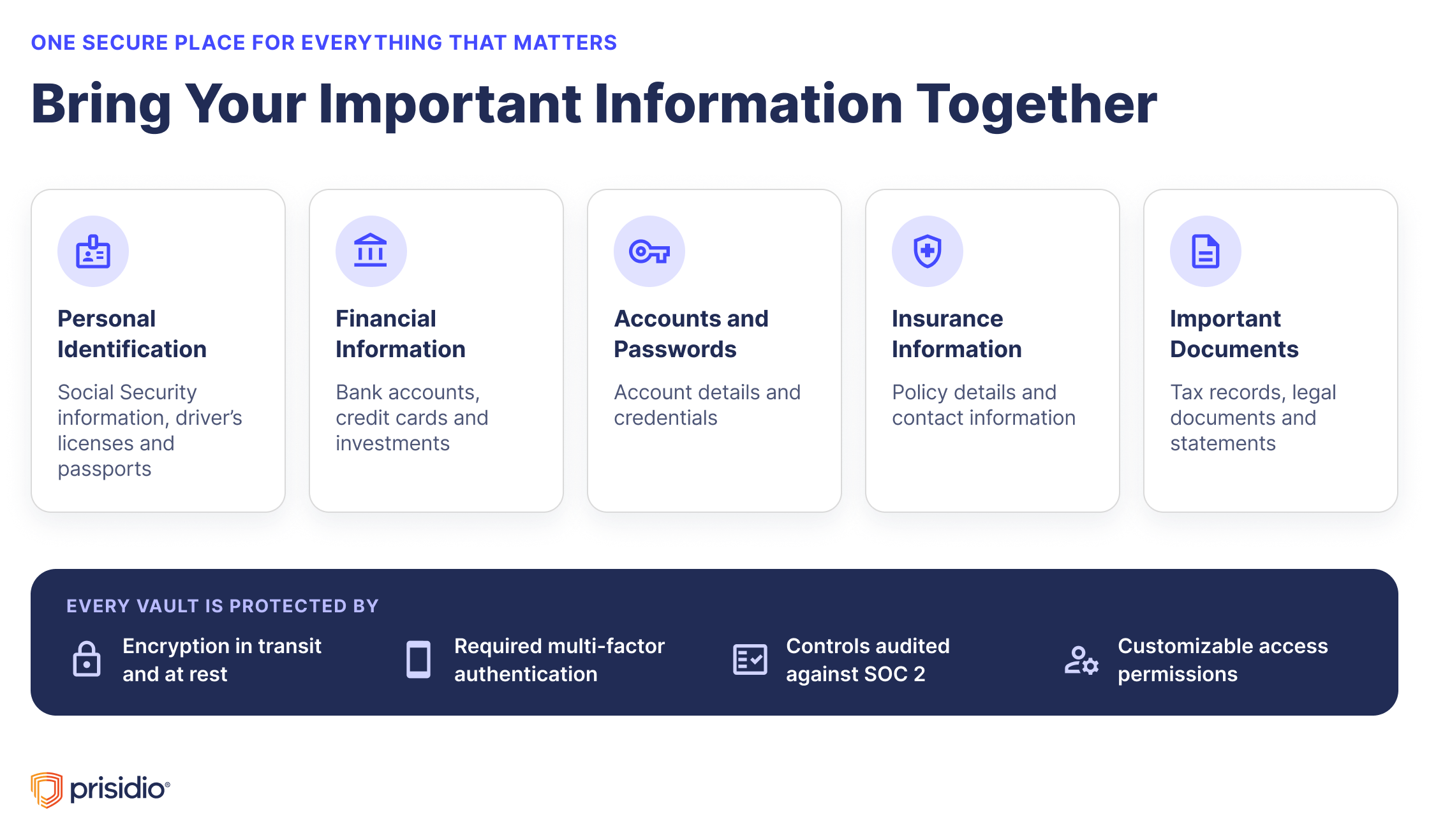
Prisidio protects your information with multiple layers of security, including encryption in transit and at rest, required multi-factor authentication for every account and security controls that are independently audited against the SOC 2 standard. Customizable access permissions add another layer, so you decide who can see what.
Rather than relying on unsecured spreadsheets, notes or documents stored across different devices, you can bring your important information together in a protected environment designed around privacy and control.
Control Who Has Access to Your Information
Protecting your identity isn't just about where you store information. It's also about who can access it.
Sharing passwords, sending copies of identification documents through email or texting sensitive financial information can create unnecessary opportunities for exposure.
Prisidio gives you control over how your information is shared.
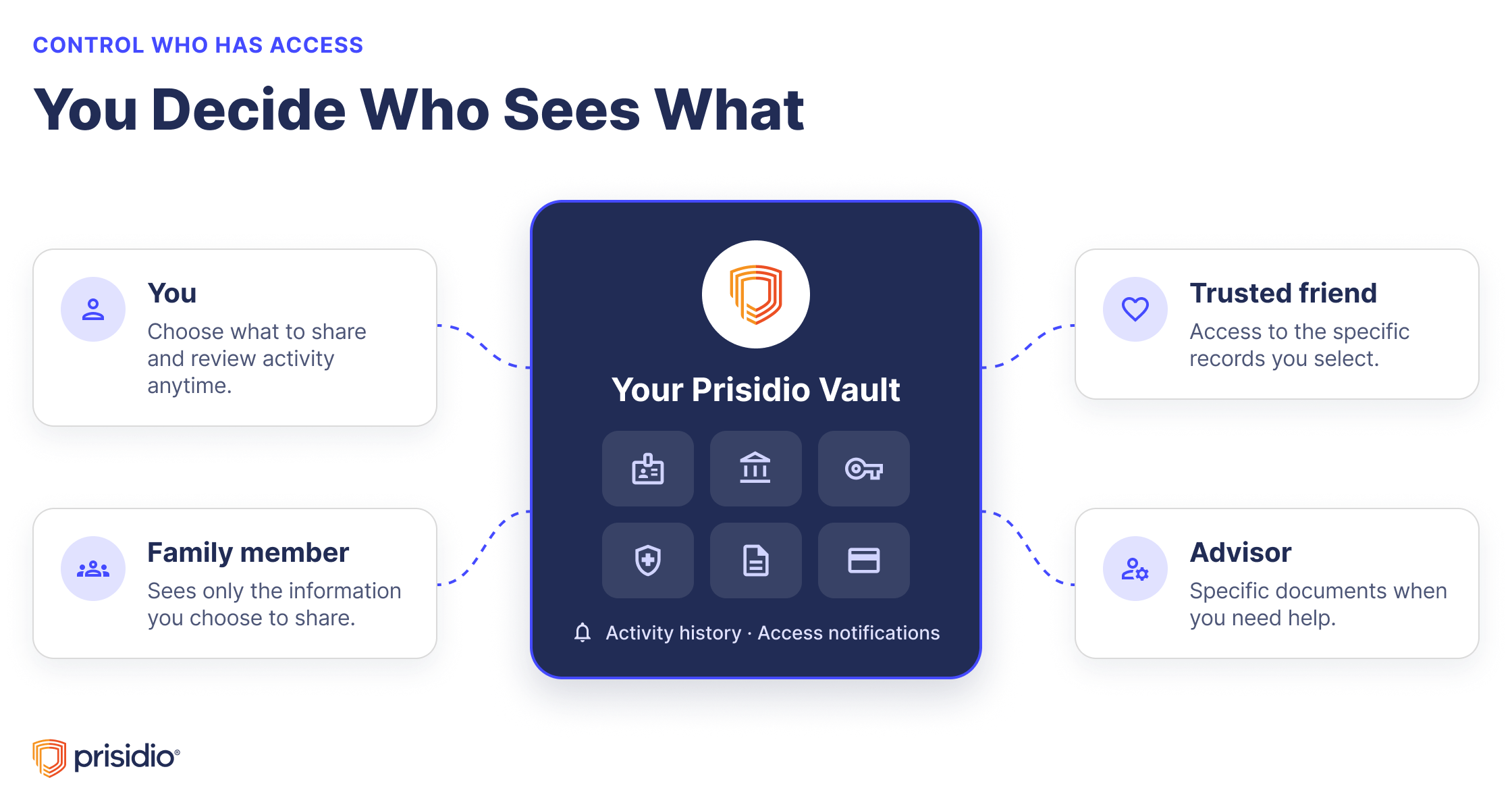
You can invite trusted family members, friends or other individuals into your vault and choose exactly which information they can access. You don't have to share everything with everyone.
You can also review activity within your vault, see who has accessed information and receive notifications when someone accesses your vault.
That added visibility helps you stay informed about how your information is being accessed and shared.
And when something seems suspicious, you have greater insight into what's happening and can take steps to manage access.
If Identity Theft Happens, Being Prepared Matters
Even people who take precautions can become victims of identity theft.
A convincing phishing email, compromised payment card or stolen piece of personal information can create a stressful situation that takes considerable time and effort to resolve.
When that happens, the last thing you want is to spend hours searching through emails, filing cabinets, old messages and different applications to find the information you need.
Having a Prisidio vault can make the process more manageable.
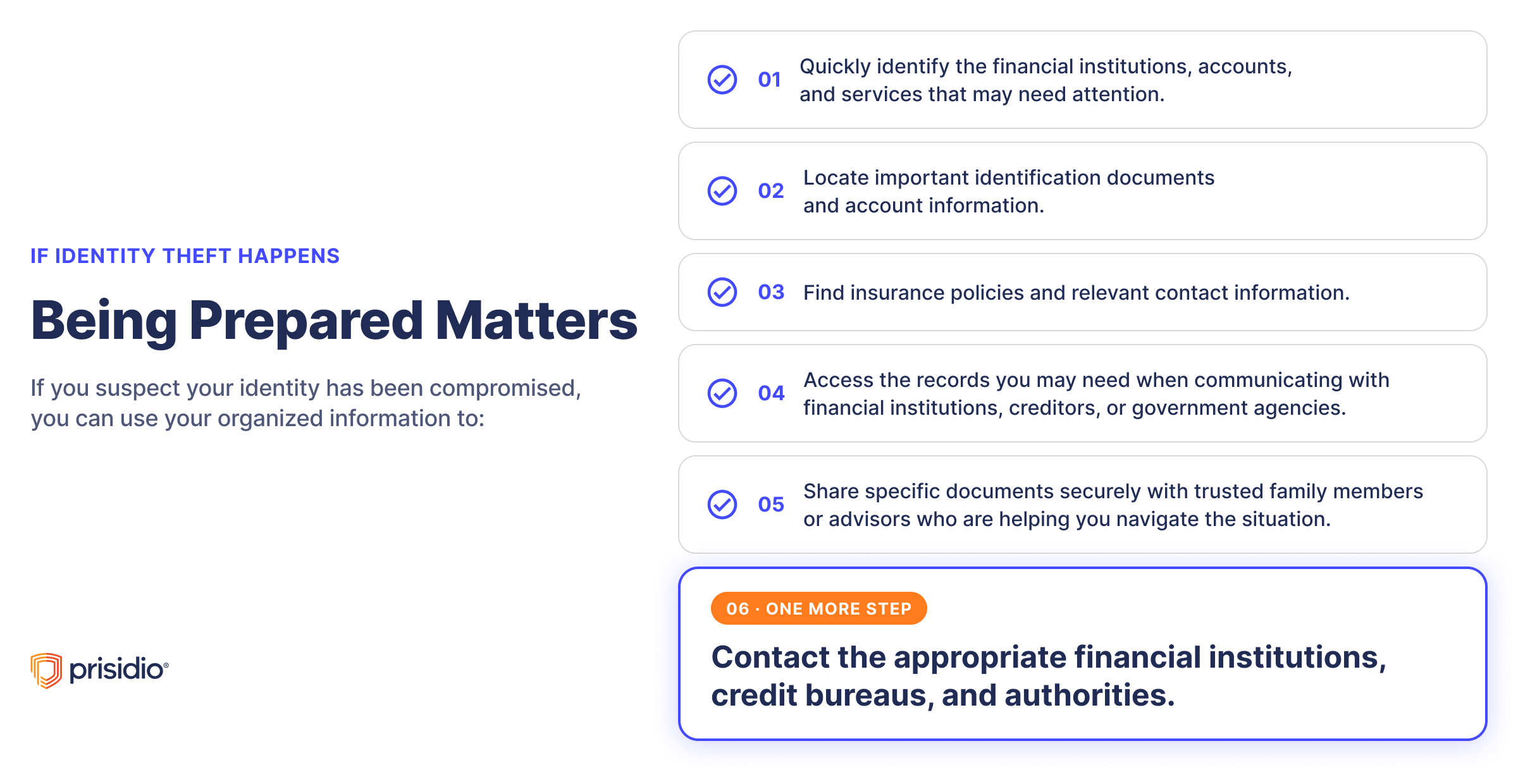
If you suspect your identity has been compromised, you can use your organized information to:
- Quickly identify the financial institutions, accounts and services that may need attention.
- Locate important identification documents and account information.
- Find insurance policies and relevant contact information.
- Access the records you may need when communicating with financial institutions, creditors or government agencies.
- Share specific documents securely with trusted family members or advisors who are helping you navigate the situation.
Prisidio doesn't automatically detect identity theft, reverse fraudulent transactions or restore compromised accounts. Those situations still require contacting the appropriate financial institutions, credit bureaus and authorities.
That's why it's worth pairing your vault with an identity protection service. These services can monitor your credit, personal information and the dark web for signs of misuse, alert you to suspicious activity and, in many cases, provide restoration support if your identity is stolen. Monitoring helps you spot a problem early. Your Prisidio vault helps you respond to it.
Monitoring helps you spot a problem early. Your Prisidio vault helps you respond to it.
But having the right information organized and accessible can eliminate some of the confusion and unnecessary delays that make an already difficult experience even more stressful.
Make Identity Protection Part of Your Everyday Preparedness
Identity protection shouldn't be something you think about only after a problem occurs.
Your financial accounts change. You open new accounts, update passwords, receive new insurance policies and accumulate important documents throughout your life.
Keeping that information organized and secure should be an ongoing practice.
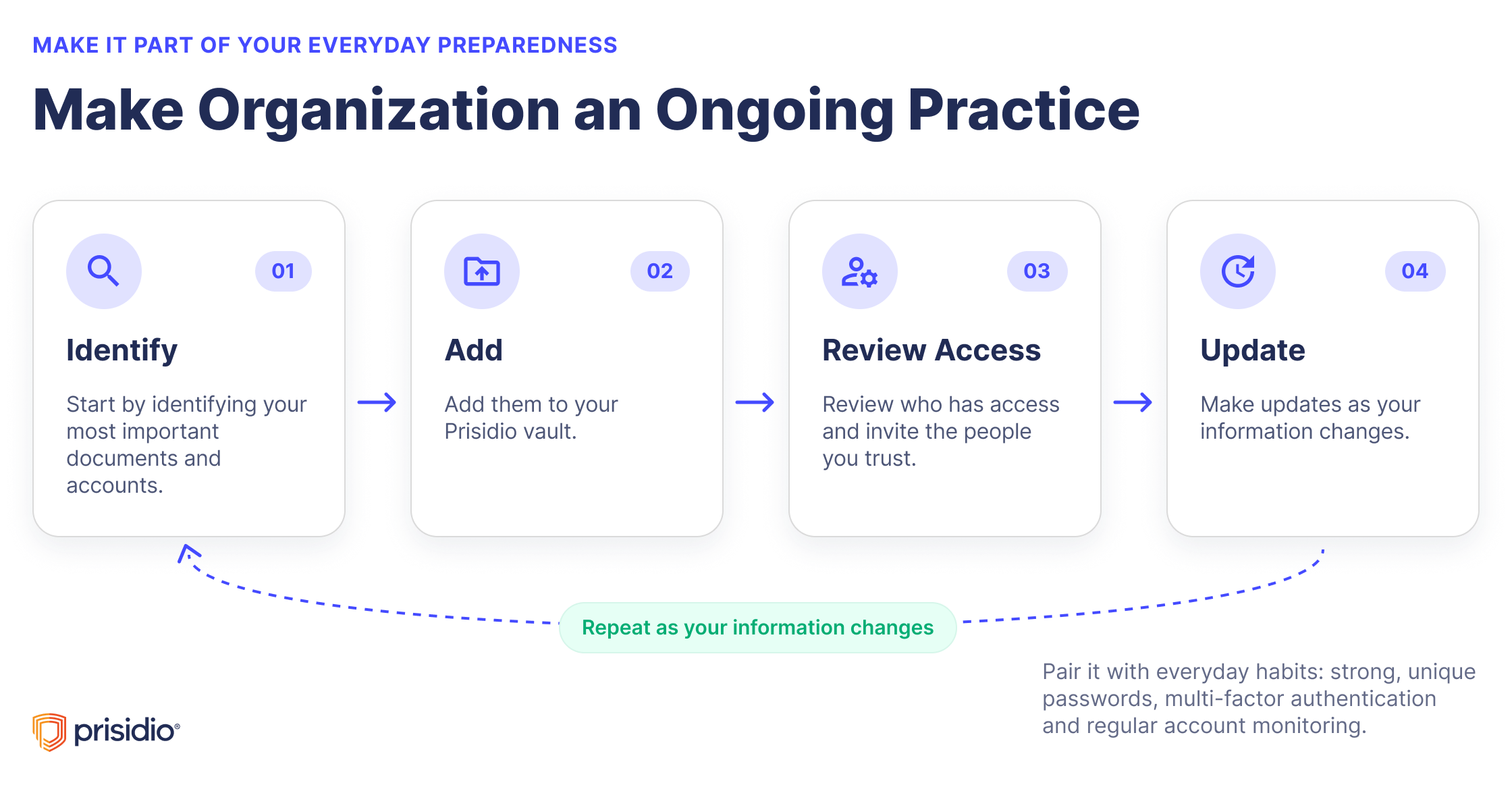
Start by identifying your most important documents and accounts. Add them to your Prisidio vault. Review who has access and invite the people you trust. Make updates as your information changes.
Most importantly, combine good information management with the everyday security habits The Hartford recommends: use strong, unique passwords, enable multi-factor authentication, avoid suspicious links, protect your payment information and regularly monitor your financial accounts.
The goal isn't simply to store your information.
It's to make sure you know where it is, that it's protected and that you can access what you need when it matters most.
Protect What Matters with Prisidio
The Hartford's guidance offers an important reminder: identity theft can happen to anyone, and protecting your personal information requires ongoing attention.
Prisidio helps take that protection a step further by giving you one secure, organized place for the information that makes up your life.
Whether you're taking steps to reduce your exposure to identity theft, organizing your digital life or preparing for the unexpected, having everything in one place can make a meaningful difference.
Because protecting your identity isn't just about preventing something bad from happening.
It's about being prepared if it does.